
Bettor wants to place an online wager
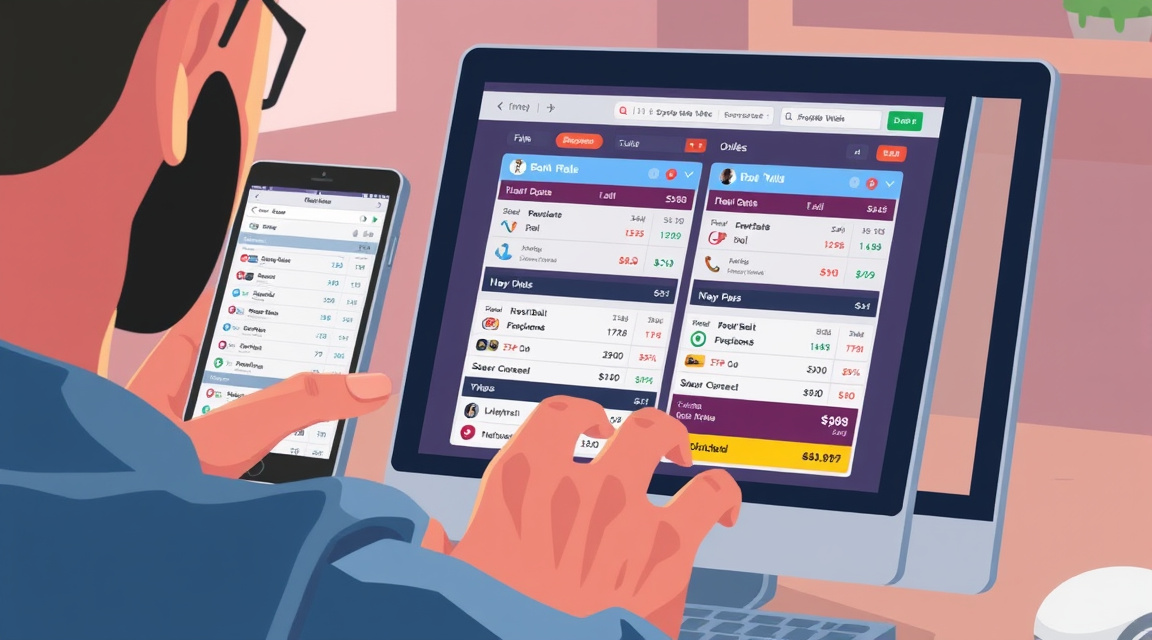
Placing a legal online sports wager in the United States follows the same five-step sequence regardless of which state the bettor is in. The sequence matters because skipping a step — registering before checking legality, or depositing before geolocation clears — usually just returns an error rather than a placed bet.
- Confirm the home state permits online (mobile or desktop) sports wagering, not just in-person betting at a retail counter.
- Register an account with a sportsbook licensed in that state, providing name, address, date of birth and Social Security number for identity verification.
- Pass a geolocation check, which confirms the device is physically inside the legal state at the moment of registration and every time a bet is placed afterward.
- Deposit funds through a supported payment method — bank transfer, debit card, PayPal or an online banking option — and wait for the deposit to clear.
- Select a posted market, build the bet slip, and confirm the wager before the line moves or the market closes.
Identity verification is not optional paperwork; it is the mechanism a licensed book uses to confirm the account holder is of legal age and not on a state or self-exclusion list. Bettors who fail verification typically have deposits refunded rather than forfeited, but the wager itself cannot go through until the check clears.
Bettor compares sportsbooks
Comparing sportsbooks means weighing four things against each other, not picking whichever app loads first: market breadth (how many sports and prop types are offered), odds pricing (how much the book's margin shaves off a fair price), app usability, and the terms attached to any promotional offer. A book that wins on markets but posts consistently worse prices than a competitor can cost a regular bettor more over a season than the sign-up bonus ever pays back.
Promo codes are the most visible part of this comparison, but the code itself is only an entry point. A welcome offer typically converts to withdrawable cash only after the bettor meets rollover conditions — wagering the bonus amount, or some multiple of it, before it can be cashed out — and only within a fixed expiry window. Some offers pay out in bonus bets rather than cash, which carry their own restrictions on stake and market eligibility. None of this cancels the offer's value, but a bettor who checks the terms before opting in avoids the common surprise of a bonus that looked like free money and turned out to require a specific betting volume first.
Bettor picks a league or game
Picking a market starts with reading the posted line, then deciding which bet type to place against it. Every market carries an odds format — American, decimal or fractional depending on the book and region — that expresses both the payout and the implied probability the book has priced into the outcome, a concept covered in general terms in the Wikipedia overview of sports betting.
From there the bettor chooses among:
- Single — one outcome, one leg, the simplest risk profile.
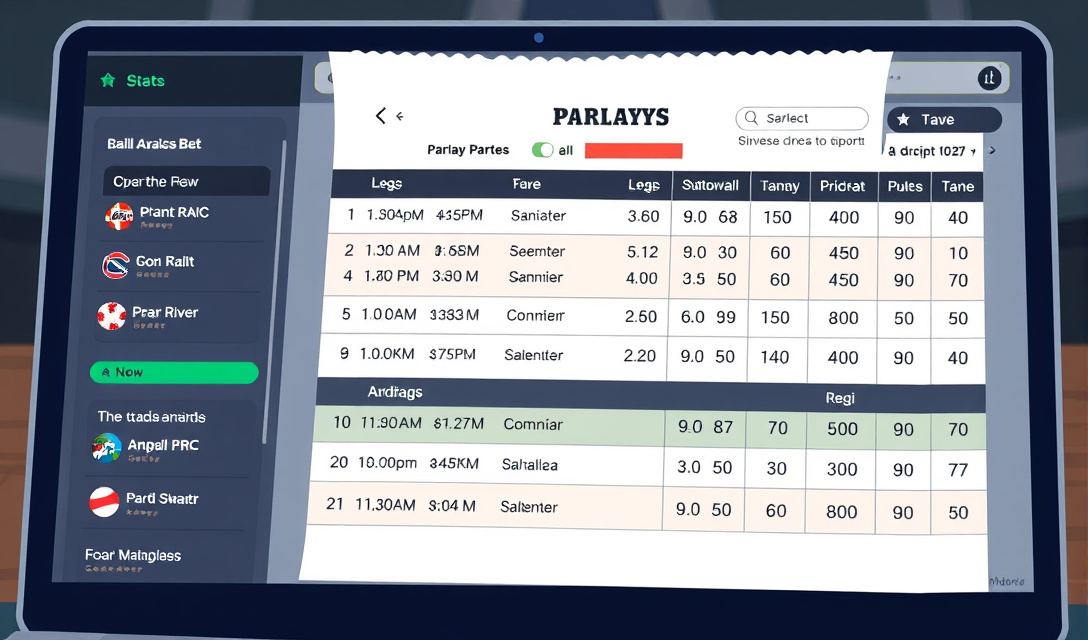
- Parlay — multiple legs combined into one bet, where every leg must win for the parlay to pay.
- Prop — a bet on a specific occurrence within a game rather than its final result.
A parlay pays more than the sum of its legs bet individually because the book is compounding the odds of several independent-or-correlated outcomes all landing together; the larger payout reflects the sharply lower probability of every leg hitting, not better value per leg. That trade-off — higher payout, correspondingly lower hit rate — is the detail most new bettors miss when a three-leg parlay looks like an obvious upgrade over three separate singles.
Bettor wins a large payout on a betting app
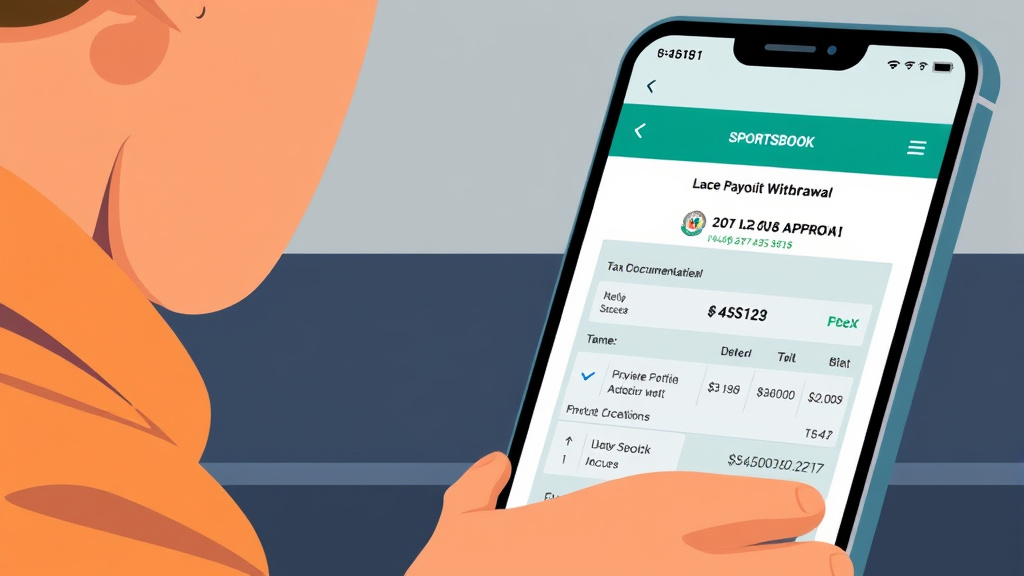
A large payout on a betting app does not arrive as the full number shown on the bet slip. Sports betting winnings are taxable income under U.S. tax law, and a sportsbook may withhold a portion of a large win and issue tax paperwork alongside — or ahead of — the payout, rather than transferring the full posted amount and leaving reporting entirely to the bettor.
In practice this means a bettor who clears a six-figure win should expect the operator's tax and compliance team to flag the payout for documentation before funds move, and to receive year-end tax forms reflecting the win regardless of whether the money was ever withdrawn or was instead re-wagered. Bettors who plan to withdraw large sums are generally better off contacting the operator's support channel in advance to confirm what identification and tax documentation will be required, since the request typically comes at withdrawal rather than at the time the bet settles.
Odds
Odds are the price a sportsbook attaches to a given outcome, and that price does two jobs at once: it sets the payout if the bet wins, and it encodes the book's implied probability for that outcome. American odds display as a plus or minus number relative to a $100 stake, decimal odds display as a single multiplier of the stake, and fractional odds display as a ratio — three notations for the same underlying price, common across markets described in the Wikipedia entry on sports betting.
Reading a line into implied probability is what separates a bettor who can spot value from one who is only reacting to the size of a potential payout. A heavily favored side carries odds that imply a high probability and a correspondingly small payout on a winning bet; a big underdog carries odds that imply a low probability and a large payout, because the book expects to collect on that side less often. The odds move as money comes in on either side and as new information — injuries, weather, lineup changes — reaches the market, which is why a line checked an hour before kickoff can differ meaningfully from the line at the moment the bettor first looked.
Parlay
A parlay combines two or more individual bets — legs — into a single wager that only pays if every leg wins. Losing even one leg loses the entire parlay, which is the central risk a bettor accepts in exchange for a payout that multiplies across all the combined legs rather than paying out at each leg's individual odds.
Parlays are heavily promoted by sportsbooks because they carry a larger house edge than the same bets placed individually, a structural feature of the format rather than a flaw in any one book's pricing. That does not make parlays a bad bet in every case — a bettor who genuinely likes several outcomes and wants leveraged exposure to all of them is using the format as intended — but it does mean a parlay should be evaluated as its own bet type with its own odds, not treated as a cheaper way to back several singles at once.
Online sportsbook
An online sportsbook is a website or app operated under a gambling license issued by a specific U.S. state, permitting it to accept real-money wagers from bettors physically located inside that state's borders. The license is what separates it from an unregulated betting site: it ties the operator to state consumer-protection rules, audited game and pricing integrity, and a formal complaint process if funds are withheld or a bet is voided incorrectly.
Not every book advertised to U.S. bettors holds one of these licenses. Offshore operators such as Bovada accept U.S. bettors without a U.S. state gambling license, operating instead under licensing arrangements outside the country. That distinction matters for recourse: a bettor with a dispute against a state-licensed book can escalate to that state's gaming regulator, while a bettor with a dispute against an offshore book has no equivalent domestic regulatory body to appeal to, and deposit protections that apply to licensed operators do not extend to offshore ones. The two categories are often listed side by side in sportsbook comparisons without this distinction being made explicit, but it is the single most consequential difference between them.
Sports betting app
A sports betting app is the mobile version of a licensed sportsbook, and it is the format the large majority of U.S. bettors actually use to place wagers rather than a desktop site. Comparisons of these apps generally weigh the same criteria as the sportsbook itself — market coverage, odds pricing, live betting speed, and how offers are structured — layered with app-specific factors like login speed, bet-slip design and how quickly a geolocation check clears on a given device, criteria reflected in ongoing app reviews from outlets such as Sports Betting Dime.
The app is also where the geolocation requirement is enforced in practice: it runs continuously in the background rather than as a one-time check at signup, since a bettor who crosses a state line mid-session can lose the ability to place a new wager even with funds already in the account. Because the check depends on device location services, a bettor using a VPN or with location services disabled will typically be blocked from betting even while physically inside a legal state, which is a common source of confusion for otherwise-eligible users.
State legality of sports betting
Legal online sports wagering is not uniform across the country: some states permit it fully, some allow only retail betting at a licensed venue, and some prohibit it outright, with the list of which states fall into which category changing as legislatures act. A current state-by-state breakdown, including effective dates for newly legalized markets, is maintained in the 50-state sports betting guide from Action Network.
Two things stay constant across nearly every legal state: a minimum wagering age, generally 21, and a requirement that the bettor register and bet from a location physically inside that state regardless of where they hold residency. A bettor visiting a legal state from a state where betting is illegal can typically still place a wager while physically present, since the geolocation check — not the bettor's home address — is what the sportsbook relies on to confirm eligibility. Because legality changes by statute, checking a current state guide is more reliable than relying on a general sense of "most states allow this now."
Geolocation verification
Geolocation verification is the technical check that confirms a bettor's device is physically inside a state where online sports betting is legal, and it runs both at registration and continuously while the app is open. Sportsbook apps typically use a combination of GPS, Wi-Fi network data and device sensors to triangulate location, since GPS alone can be spoofed or degraded indoors.
A failed geolocation check does not necessarily mean the bettor is outside the legal state; it often means the app cannot confirm location with enough confidence, commonly because location services are disabled, a VPN is active, or the device is too close to a state border for the check to resolve reliably. Bettors who hit repeated geolocation errors are generally advised to enable full location permissions for the app, disable any VPN, and avoid betting near a state boundary, since the check errs toward blocking a bet rather than allowing one it cannot confirm.
What states allow sports gambling online?
The set of states permitting online sports wagering has grown steadily since the practice began expanding beyond Nevada, and it now covers a majority of U.S. states in some legal form, though the exact list and the scope of what's covered — full mobile betting versus retail-only — shifts as more legislatures act. The most current breakdown, updated as states change status, is tracked in the Action Network 50-state guide.
Because this list changes with new legislation, the more durable habit for a bettor is checking a maintained state guide directly rather than relying on a fixed list, since a state marked unavailable one year can legalize online wagering the next, and a state offering only retail betting can later add a mobile market.
What happens if you win over $100,000 on FanDuel?
A win of that size does not simply appear in the bettor's account balance the way a smaller win would. Because gambling winnings are reportable income, an operator processing a large payout will typically flag the account for tax documentation and may withhold funds temporarily while that paperwork is prepared, rather than releasing the full amount instantly.
Practically, that means the bettor should expect to provide additional identity confirmation beyond what was required at signup, and to receive tax forms reflecting the win either alongside the withdrawal or at year-end. The displayed payout on the bet slip is the gross win; the amount that actually reaches a bank account after withholding and paperwork can take longer to arrive than a smaller, routine withdrawal would. A bettor expecting a payout in that range should check the operator's stated withdrawal and verification process for large wins before requesting the withdrawal, rather than assuming it will process on the same timeline as a routine cashout.
Bettors uncomfortable with how much they're wagering, win or lose, can use in-app deposit and loss limits or a state self-exclusion program rather than relying on willpower alone — tools that exist specifically because outcomes at this scale are neither typical nor free of consequence for the account holder.